Evidence
Before You Sue Your Lawyer: The Evidence Checklist
Before you sue your lawyer, confirm your deadline, then gather your file, fee agreement, bills, messages, court docket, and proof of your loss. The checklist.
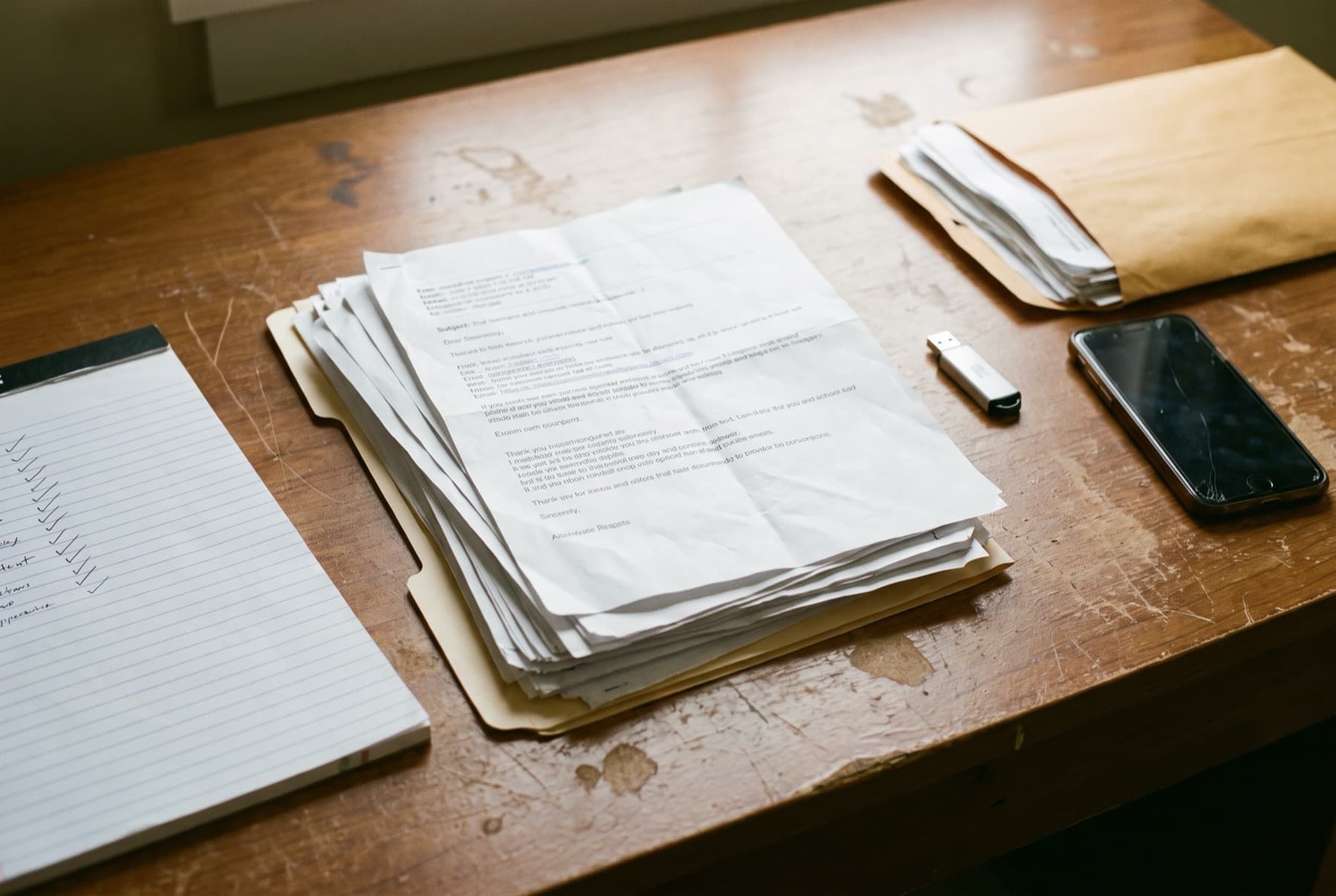
Before you sue your lawyer, confirm your filing deadline, then gather six things: your fee agreement, your complete client file, every bill and trust account statement, all communications with the lawyer, the court docket and orders, and proof of what the mistake cost you. A malpractice attorney will use these to decide in a short time whether you have a case.
The list below follows what you have to prove in a legal malpractice case. Work through it in order, and keep originals safe.
Key takeaways.
- Check your deadline first. California allows as little as one year from discovery, and Texas and Florida two years.
- Ask for your complete client file in writing. ABA Model Rule 1.16(d) requires a lawyer to surrender the papers and property you are entitled to.
- Gather proof of all four elements: the relationship, the mistake, how it caused your loss, and the dollar amount.
- Evidence from the original case matters as much as evidence about the lawyer, because you usually have to prove that case too.
- Write a dated timeline now, while you remember the details.
See if you have a case.
1 of 7
Six quick questions. Free, private, no obligation.
Step one is your deadline, not your documents
Gathering evidence takes time, and the statute of limitations keeps running while you do it. In California, you generally have one year from discovering the lawyer's mistake, and never more than four years from the act, to file (Code of Civil Procedure § 340.6). Texas allows two years (Willis v. Maverick, 1988), Florida two years from discovery (Fla. Stat. § 95.11), and New York three years (CPLR 214(6)).
Write down the date you first learned something was wrong, and how you learned it. That date can matter under the discovery rule. Then look up your state on the statute of limitations table. If the deadline is close, contact a malpractice lawyer before you finish the rest of this list.
Proof that the lawyer represented you
A malpractice claim starts with a duty, which usually means you were the lawyer's client. The legal term for that relationship is privity, and some statutes limit malpractice claims to it: Florida's two-year malpractice limit applies only to persons in privity with the professional. Gather:
- The engagement letter or retainer agreement, and any amendments
- The fee agreement. Under ABA Model Rule 1.5(c), a contingent fee agreement must be in a writing signed by the client, so if you had one, it should exist.
- Your first emails or intake forms, and any court filing listing the lawyer as your attorney
- Payment records: canceled checks, card statements, receipts
- Any letter ending the representation, from you or from the lawyer, which can matter for deadline rules tied to when the representation ended
If there was never a written agreement, do not assume you have no claim. Courts in many states can find an attorney-client relationship from the way the lawyer and client acted, even without a signed agreement. Gather the emails, texts, and notes that show the lawyer giving you legal advice and you relying on it, along with any invoices or payments.
The engagement letter also shows the scope of the job. A lawyer hired only to review a lease is not usually responsible for a lawsuit they were never asked to handle.
How to get your complete client file
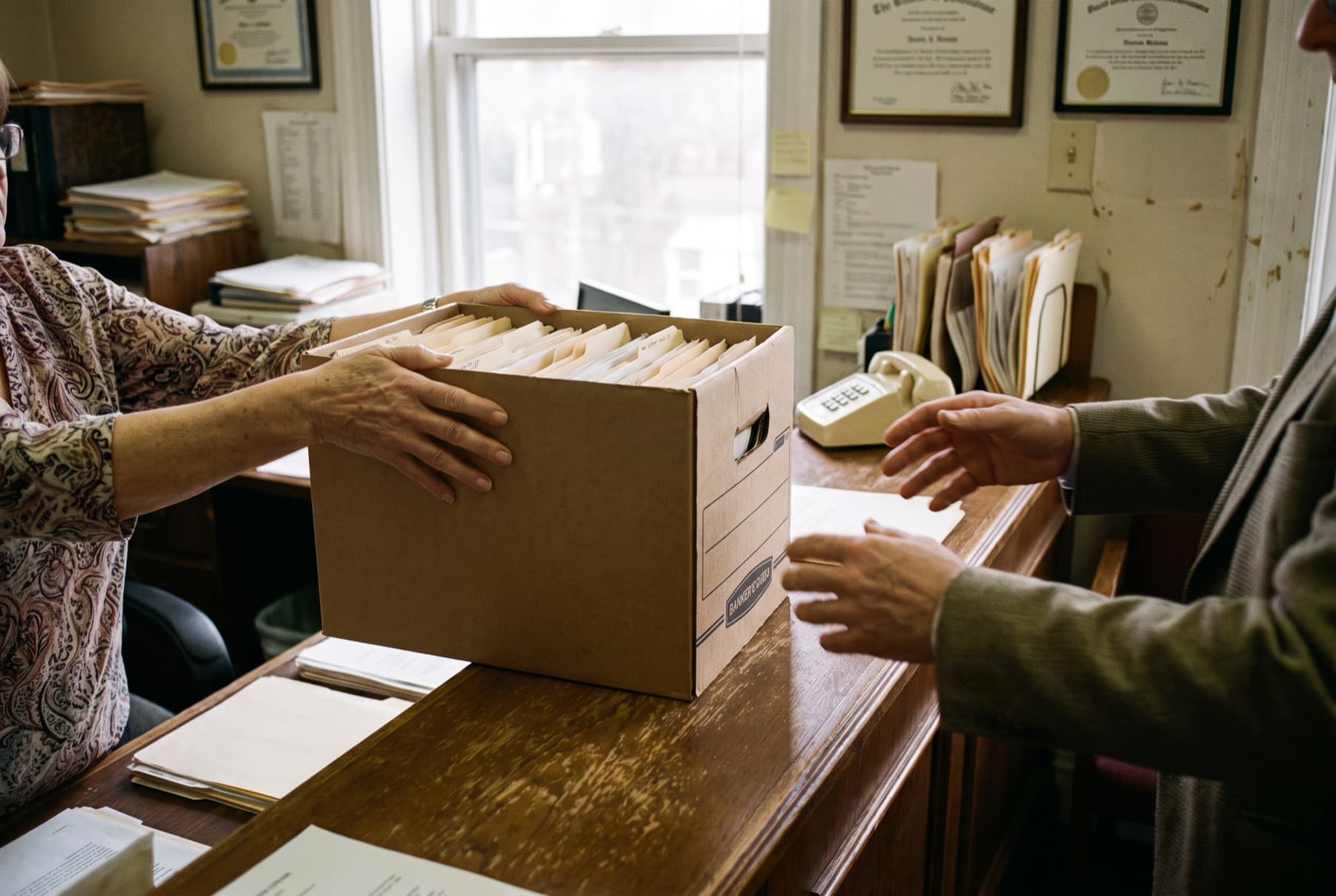
Your client file is the single most useful piece of evidence. ABA Model Rule 1.16(d) requires a lawyer, when a representation ends, to surrender papers and property the client is entitled to and refund any advance fee that has not been earned. Some states go further. Louisiana's version says that on written request the lawyer must promptly release the entire file to the client or new lawyer, and may not condition release on copying costs.
- Send a written request by email and by a trackable method. Ask for the complete file, including correspondence, pleadings, discovery, research, and notes the rules in your state allow.
- Keep a copy of the request and proof of delivery.
- If the lawyer refuses or stalls, your state bar may help, and the refusal itself can be the basis of a bar grievance.
Our guide on how to get your case file from your lawyer has more detail.
Evidence of the mistake
You need to show what the lawyer did or failed to do, and when. The lawyer is judged against the standard of care, so dates and specifics matter.
- The court docket and orders. The docket lists every filing with its date. A dismissal order, default judgment, or sanctions order often states the reason in plain words.
- Every communication. Emails, texts, letters, and voicemails with the lawyer and staff. Save them in original form, with dates and sender details intact.
- Settlement paperwork. Offers, demand letters, and anything signed on your behalf. If a settlement happened without your approval, this is the core proof. See settled without consent.
- Documents the lawyer drafted. Contracts, deeds, wills, trusts, or filings with the errors. See drafting errors.
- A dated timeline of events, calls, and what you were told. Write it now, and note which entries are from memory.
Not sure the problem qualifies? Compare it to the 12 signs your lawyer is committing malpractice and what is not legal malpractice.
Evidence of what the mistake cost you
This is where many claims fail. A mistake without a loss is not a claim. The Texas Supreme Court has said a lawyer can be negligent and yet cause no harm (Rogers v. Zanetti, 2017). If the mistake was in a lawsuit, you usually have to prove you would have won or done better, which courts call the case within a case. Gather:
- Evidence from the original case: police reports, medical records, contracts, witness names, and expert reports that were or should have been used
- The result you got and the result you expected, with anything that supports the higher figure (offers, verdicts in similar cases your lawyer cited, appraisals)
- Proof the other side could have paid: insurance information, business assets, or a policy limit disclosure. This is collectibility.
- Costs of fixing the mistake: new lawyer invoices, court costs, penalties, and interest. New York's highest court has held that malpractice damages may include litigation expenses incurred to avoid, minimize, or reduce the harm the lawyer caused (Rudolf v. Shayne, 2007).
- Money trail: trust account statements and settlement disbursement sheets, if money is missing. See stolen client funds.
For how these add up to a number, see how much a legal malpractice case is worth.
How to organize it for a malpractice lawyer
A malpractice attorney will often decide whether to take a case based on the first look at your materials. Make that look easy.
- Write a one-page summary. Who the lawyer was, what they were hired to do, what went wrong, when you found out, and what it cost you. Plain sentences, no adjectives.
- Put documents in date order. One folder, paper or digital, with files named by date and a short description, such as 2025-03-14 dismissal order.
- Build a short index. A simple list of every document with its date and one line on why it matters.
- Separate the two cases. Keep evidence about the lawyer's conduct apart from evidence about the original matter. The attorney will evaluate both.
- Note what is missing. If the lawyer has not released the file, say so and include your written request.
If a relative or friend helped you deal with the lawyer, ask them to write down what they saw and heard too, with dates. Their notes can fill gaps in your own memory.
Keep originals yourself and share copies. If you have to choose what to bring first, bring the engagement letter, the order or document that shows the mistake, and your summary.
What not to do while you gather evidence
- Do not sign a release or settlement from the lawyer. Under ABA Model Rule 1.8(h), a lawyer may not settle a malpractice claim with an unrepresented client unless the client is advised in writing to seek independent counsel and given a reasonable opportunity to do so. Get that advice before you sign.
- Do not let the original case lapse. If the matter is still open, its deadlines keep running. A new lawyer may be able to fix the problem, which protects you more than any later lawsuit. See how to fire your lawyer.
- Do not edit or delete anything. Keep emails, texts, and files exactly as they are, even the ones that make you look bad. Altered evidence can sink a strong claim.
- Do not post about it. Online reviews and social posts about the lawyer can be used against you and can create new legal problems. Wait until you have advice.
- Do not rely on the lawyer's explanation of your deadline. The person who made the mistake is not the right person to tell you how long you have to sue them.
If what you are really dealing with is a billing dispute or conduct problem rather than a loss, the evidence you gather here is still useful for a fee arbitration request or a grievance. See legal malpractice vs. a bar complaint.
The checklist at a glance
| Item | Proves | Where to get it |
|---|---|---|
| Retainer and fee agreement | Duty and scope | Your records, the file |
| Complete client file | What the lawyer did | Written request |
| Docket and court orders | Deadlines and dismissals | Court clerk or online |
| Emails, texts, letters | What you were told | Your devices and inbox |
| Bills and trust statements | Fees and missing money | Your records, the lawyer |
| Original case evidence | Case within a case | The file, public records |
| Proof of loss and fix costs | Damages | New lawyer, receipts |
| Dated timeline | Sequence and discovery date | You, written now |
Two more questions a malpractice attorney will ask: does the lawyer carry malpractice insurance, and will you need an expert witness? See does your lawyer have malpractice insurance and the expert witness guide. Then read how to sue your lawyer for the next steps.
Once you have the basics together, a free case review takes about two minutes and can connect you with an independent attorney in your state who handles legal malpractice claims.
Common questions.
What evidence do I need to sue my lawyer?
You need proof that the lawyer represented you, proof of the mistake, and proof of the money it cost you. That usually means the fee agreement, your complete client file, communications, the court docket and orders, bills, and evidence from the original case showing what you should have received.
How do I get my case file from my lawyer?
Ask in writing and keep proof that you sent it. ABA Model Rule 1.16(d) requires a lawyer to surrender the papers and property a client is entitled to when the representation ends, and some states, like Louisiana, require prompt release of the entire file on written request.
Should I confront my lawyer before suing?
It is usually better to get your file and talk to a malpractice attorney first. Anything you say can become evidence, and if the lawyer offers a settlement or asks you to sign a release, ethics rules require that you be advised in writing to get independent legal advice first.
Do I need to prove I would have won my original case?
Usually, if the mistake happened in a lawsuit. You typically must show that without the mistake you would have won or gotten a better result, and in many states that the result could have been collected. Evidence from the original case is part of your malpractice case.
How soon should I act if I think my lawyer made a mistake?
Right away. Malpractice deadlines can be as short as one year from discovery in California and two years in Texas and Florida. Gathering documents takes time, so check your deadline before anything else.
Sources.
Statutes, court rules, appellate opinions, and bar publications we relied on. See our editorial standards.
- 1.California Code of Civil Procedure § 340.6
- 2.Florida Statutes § 95.11
- 3.New York CPLR § 214
- 4.Koning Rubarts LLP, Legal Malpractice in Texas: The Basics (Oct. 2025), citing Willis v. Maverick
- 5.Rule 1.16(d), declining or terminating representation (North Carolina State Bar)
- 6.Louisiana Rule 1.16 (Louisiana Legal Ethics)
- 7.Rule 1.5, fees (Louisiana Legal Ethics, with ABA Model Rule 1.5(c) comparison)
- 8.Rule 1.8(h) (Louisiana Legal Ethics, identical to ABA Model Rule)
- 9.Rudolf v. Shayne, Dachs, Stanisci, Corker & Sauer, 2007 NY Slip Op 03594 (N.Y. 2007)
- 10.Rogers v. Zanetti, No. 15-0557 (Tex. Apr. 28, 2017)
- 11.Wiley v. County of San Diego, 19 Cal. 4th 532 (1998)
Keep reading.
All guides
Claim type
Missed deadline
A blown statute of limitations or court deadline that cost you a case you could have won.

Claim type
Stolen client funds
Your lawyer took, kept, or 'borrowed' settlement money, a retainer, or other funds held for you.

The basics
How to Sue Your Lawyer: The Complete 2026 Guide
Evidence
How to Get Your Case File From Your Lawyer