Evidence
Do You Need an Expert Witness to Sue Your Lawyer?
In most legal malpractice cases you need an expert witness to prove what a competent lawyer would have done and what the mistake cost you. When you might not.
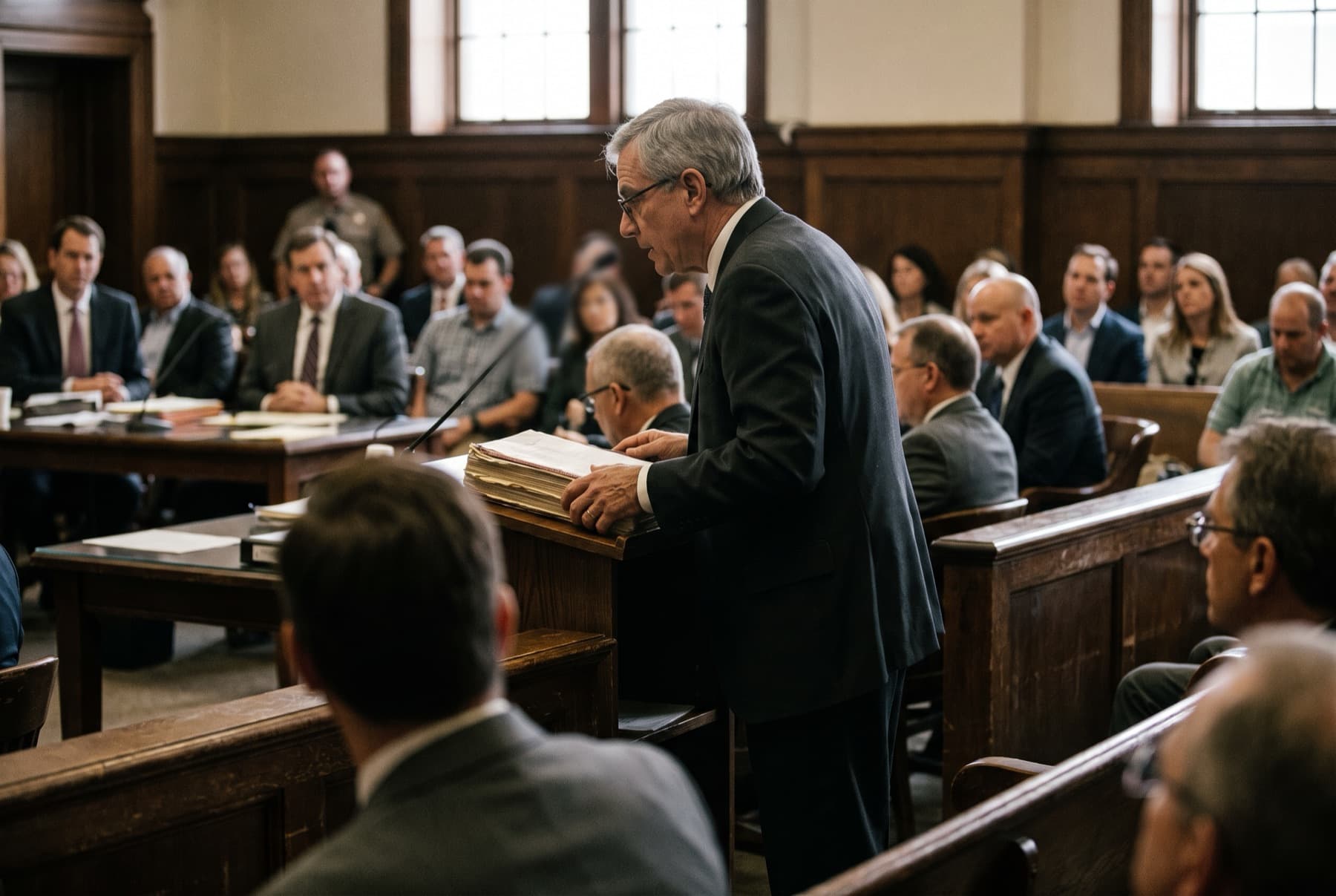
In most cases, yes: to sue your lawyer for malpractice you will need an expert witness, usually another experienced lawyer, to testify about what a reasonably careful lawyer would have done and how the mistake changed the outcome. Courts treat the standard of care for lawyers as a subject outside the knowledge of ordinary jurors, so a case without an expert is often dismissed before trial.
The exception is narrow. When the mistake is so obvious that any layperson could see it, some courts allow a case to go forward without an expert on that point. But even then, you may still need expert proof on causation and damages. Here is how the rule works, with real decisions.
Key takeaways.
- Usually yes. Courts generally require expert testimony to prove the standard of care a lawyer should have met, because jurors are not expected to know it.
- There is a narrow exception when the mistake is obvious to anyone, such as advice that led a client to break a criminal statute.
- An expert may also be needed for causation and damages. Texas threw out a $1,141,671.67 judgment in 2024 because the client had no expert on damages.
- Some states require expert support before or soon after filing. Pennsylvania requires a certificate of merit within 60 days of filing a complaint against a lawyer.
- Expert costs are a big part of why malpractice lawyers screen cases carefully.
See if you have a case.
1 of 7
Six quick questions. Free, private, no obligation.
Why courts usually require an expert
A legal malpractice claim has four basic parts: the lawyer owed you a duty, the lawyer breached the standard of care, the breach caused your loss, and you suffered damages. The second and third parts are where experts come in.
Jurors can decide whether a driver ran a red light. They are not expected to know how an experienced lawyer handles discovery, when to recommend a settlement, or how a trust should be drafted. So courts require a qualified witness to explain what the standard was and how the lawyer fell short.
California is a clear example. Courts there have held that the standard of care for attorneys must be proved by expert testimony, citing Unigard Insurance Group v. O'Flaherty & Belgum (1995). In Lipscomb v. Krause (1978), a nonsuit was properly granted when the plaintiff introduced no expert testimony about the attorney's negligence.
In California, the standard of care in a legal malpractice case generally must be proved by expert testimony, and a case with no expert can end in a nonsuit, as it did in Lipscomb v. Krause (1978).
Our guide to how to sue your lawyer covers the other elements, and what is not legal malpractice explains why a bad result alone does not prove a breach.
When you might not need an expert
Courts recognize a common knowledge exception. When the lawyer's negligence is obvious from the facts, a jury can find a breach without an expert explaining it. California decisions illustrate how narrow it is:
- Goebel v. Lauderdale (1989): no expert was required where the lawyer's advice led the client to violate a criminal statute, because the negligence was readily apparent from the facts.
- Betts v. Allstate Insurance Co. (1984): no expert was needed where the lawyer abandoned the client's interests in favor of the insurance company that hired him, because the evidence spoke for itself.
- Day v. Rosenthal (1985): the court held that an expert is not strictly required where the lawyer's conduct is clearly contrary to established standards.
The common knowledge exception applies only when a lawyer's error is obvious to a layperson, such as advice that led a client to break a criminal statute in Goebel v. Lauderdale (1989); most malpractice claims do not fit it.
People often assume a missed deadline fits this exception. Missing a filing deadline may be an obvious breach, but you still have to prove what the case was worth and that you would have won it. That second question usually needs an expert, which is where many "obvious" cases run into trouble.
Experts on causation and damages, not just breach
Proving the lawyer made a mistake is only half the case. You must also prove the mistake caused a loss, usually by trying the case within a case. Courts often require expert testimony here too.
The Texas Supreme Court held in Alexander v. Turtur & Associates (2004) that breach and causation are separate questions, that causation is not presumed even when negligence is admitted, and that when the link between the lawyer's conduct and the client's loss is not obvious or within the common understanding of laypersons, the client must introduce expert testimony on causation. In Elizondo v. Krist (2013), the same court held that expert testimony on damages fails if it is conclusory or leaves too great a gap between the data and the opinion.
Those rules decided a 2024 case. In Chamblee Ryan v. JBS Carriers, a company sued its former law firm, alleging the firm misjudged the settlement value of a lawsuit, failed to communicate a settlement offer during trial, and failed to file a notice of appeal. The trial court awarded $1,141,671.67. The Tyler Court of Appeals reversed and rendered a take-nothing judgment because the client had no admissible expert testimony on damages from the lost settlement opportunity.
In Chamblee Ryan v. JBS Carriers (Tex. App. 2024), a $1,141,671.67 legal malpractice judgment was reversed outright because the client offered no expert testimony on what a settlement would have been worth.
Some claims need two experts: a lawyer to explain the breach, and a second lawyer or a financial expert to value the loss. Our guides on the case within a case and what a case is worth explain how damages are proved.
States that require an expert before you file
Some states do not wait for trial. They require a certificate of merit or similar statement near the start of the case, showing that a qualified professional supports the claim.
Pennsylvania is a clear example. Its Rule of Civil Procedure 1042.1 applies the professional liability rules to claims against licensed professionals, and expressly includes an attorney at law. Rule 1042.3 then requires the plaintiff's lawyer, or the plaintiff if unrepresented, to file a certificate of merit with the complaint or within 60 days after filing it, stating that an appropriate licensed professional has supplied a written statement that there is a reasonable probability the defendant's conduct fell outside acceptable professional standards and caused the harm.
In Pennsylvania, a person suing a lawyer for professional negligence must file a certificate of merit with the complaint or within 60 days after filing, under Pennsylvania Rule of Civil Procedure 1042.3.
Other states have their own versions, and the rules differ on timing, who may sign, and whether they apply to lawyers at all. Missing one can end a case early. Check your state's page, for example suing a lawyer in Pennsylvania, and ask any lawyer you consult whether a pre-filing expert statement is required.
What an expert does in a legal malpractice case
An expert is involved from the early screening of your case through trial, and the work follows a fairly standard path:
- File review. Before or soon after the case is filed, the expert reviews the original file, the pleadings, key correspondence, and billing records to decide whether the lawyer's work fell below the standard of care.
- Certificate or early statement. In states with a pre-filing or early filing requirement, the expert supplies the written statement that supports the certificate.
- Written opinions. Courts set deadlines to disclose experts and their opinions. Missing those deadlines can mean the expert cannot testify.
- Deposition. The defense questions the expert under oath to test the opinions and the expert's qualifications.
- Trial testimony. The expert explains to the jury what a careful lawyer would have done, how your lawyer's work differed, and how that changed the result.
The expert is a separate witness chosen for experience in the relevant practice area, not the lawyer who represents you in the malpractice case. The defense hires its own expert, usually to say that the lawyer's choices were reasonable judgment calls or that the original case would have been lost anyway. Many malpractice trials become a contest between the two experts, which is why the quality and preparation of your expert matter so much.
In a contested legal malpractice case, both sides usually present expert witnesses, and the jury decides which expert's account of the standard of care and the lost outcome is more convincing.
Who serves as the expert and who pays
A legal malpractice expert is usually a practicing or retired lawyer with deep experience in the same kind of work as the original matter. A family law expert for a divorce case, a probate lawyer for an estate case, a trial lawyer for a botched trial. Expect the other side to challenge whether the expert actually knows the standard that applied in that practice area, in that place, at that time.
Good experts are paid for their review, reports, depositions, and trial testimony, and those costs add up. How they are paid depends on your fee agreement:
- If your lawyer works on a contingency fee, the firm often advances expert costs and is repaid from any recovery.
- Some agreements require the client to pay costs as they arise, or to repay them even if the case loses.
Read the cost terms before you sign. See whether legal malpractice lawyers work on contingency for what the agreement must say.
Because most legal malpractice cases need at least one paid expert, the cost of expert testimony is a main reason lawyers decline claims with small damages.
What to do if you cannot find an expert
You do not usually find the expert yourself. The lawyer who takes your case hires one, often after an early review of the file. If lawyers are declining your case because no expert will support it, take that seriously: it can mean the mistake, while real, did not change the outcome.
That does not leave you without options. If the problem is billing, fee arbitration does not require an expert. If the lawyer was dishonest, a bar grievance can lead to discipline. If money was taken, a client protection fund may reimburse you.
Whatever you do, get your client file now, because experts work from documents, and note the statute of limitations in your state. If you think your lawyer's mistake cost you, a free case review takes about two minutes and can connect you with an independent attorney in your state who handles legal malpractice claims.
Common questions.
Do you need an expert witness to sue a lawyer for malpractice?
In most cases, yes. Courts generally require an expert, usually an experienced lawyer, to testify about the standard of care and how the lawyer breached it, and often about causation and damages too. A narrow exception applies when the error is obvious to a layperson.
Can I sue my lawyer for missing a deadline without an expert?
Sometimes the missed deadline itself is treated as an obvious breach, but you usually still need expert testimony to prove what your original case was worth and that you would have won it. Many missed deadline cases fail on that second step rather than on the mistake itself.
What is a certificate of merit in a legal malpractice case?
It is a filing confirming that a qualified professional has reviewed the claim and believes it has merit. Pennsylvania requires one in cases against lawyers, to be filed with the complaint or within 60 days after filing. Other states have their own versions with different rules.
Who can be an expert witness in a legal malpractice case?
Usually a practicing or retired lawyer with substantial experience in the same kind of work as the original matter, such as family law for a divorce case or estate planning for a will. Some cases also use a financial expert to measure damages.
Who pays for the expert witness in a legal malpractice case?
It depends on the fee agreement. Contingency lawyers often advance expert costs and are repaid from any recovery, while some agreements require the client to pay costs as they arise or repay them even if the case is lost. The written agreement should say which applies.
What happens if I do not have an expert in a legal malpractice case?
The case can be dismissed or lost. In California a nonsuit was upheld where the plaintiff offered no expert testimony, and in 2024 a Texas appeals court reversed a $1,141,671.67 malpractice judgment because the client had no expert testimony on damages.
Sources.
Statutes, court rules, appellate opinions, and bar publications we relied on. See our editorial standards.
- 1.Advocate Magazine: Legal malpractice experts, choosing, using, or losing (Oct. 2016) (Unigard, Lipscomb, Goebel, Betts, Day v. Rosenthal)
- 2.Alexander v. Turtur & Associates, Inc., 146 S.W.3d 113 (Tex. 2004) (CourtListener)
- 3.Koning Rubarts: Legal Malpractice in Texas, the Basics (2017) (Alexander v. Turtur, Elizondo v. Krist)
- 4.Chamblee Ryan, P.C. v. JBS Carriers, Inc., No. 12-23-00125-CV (Tex. App. Tyler June 12, 2024)
- 5.231 Pa. Code Rule 1042.1 (scope, includes attorneys at law)
- 6.231 Pa. Code Rule 1042.3 (certificate of merit)
Keep reading.
All guides
Claim type
Missed deadline
A blown statute of limitations or court deadline that cost you a case you could have won.

Claim type
Bad legal advice
Your lawyer told you something about the law or your options that a careful lawyer would not have.

The basics
The Case Within a Case: Why You Have to Prove You Would Have Won

The basics
How to Sue Your Lawyer: The Complete 2026 Guide