Wyoming legal malpractice law
How to sue your lawyer in Wyoming.
Wyoming gives you 2 years from the lawyer's mistake to sue, with a discovery exception and a 6-month extension in some cases. Deadlines, proof, and fee help.
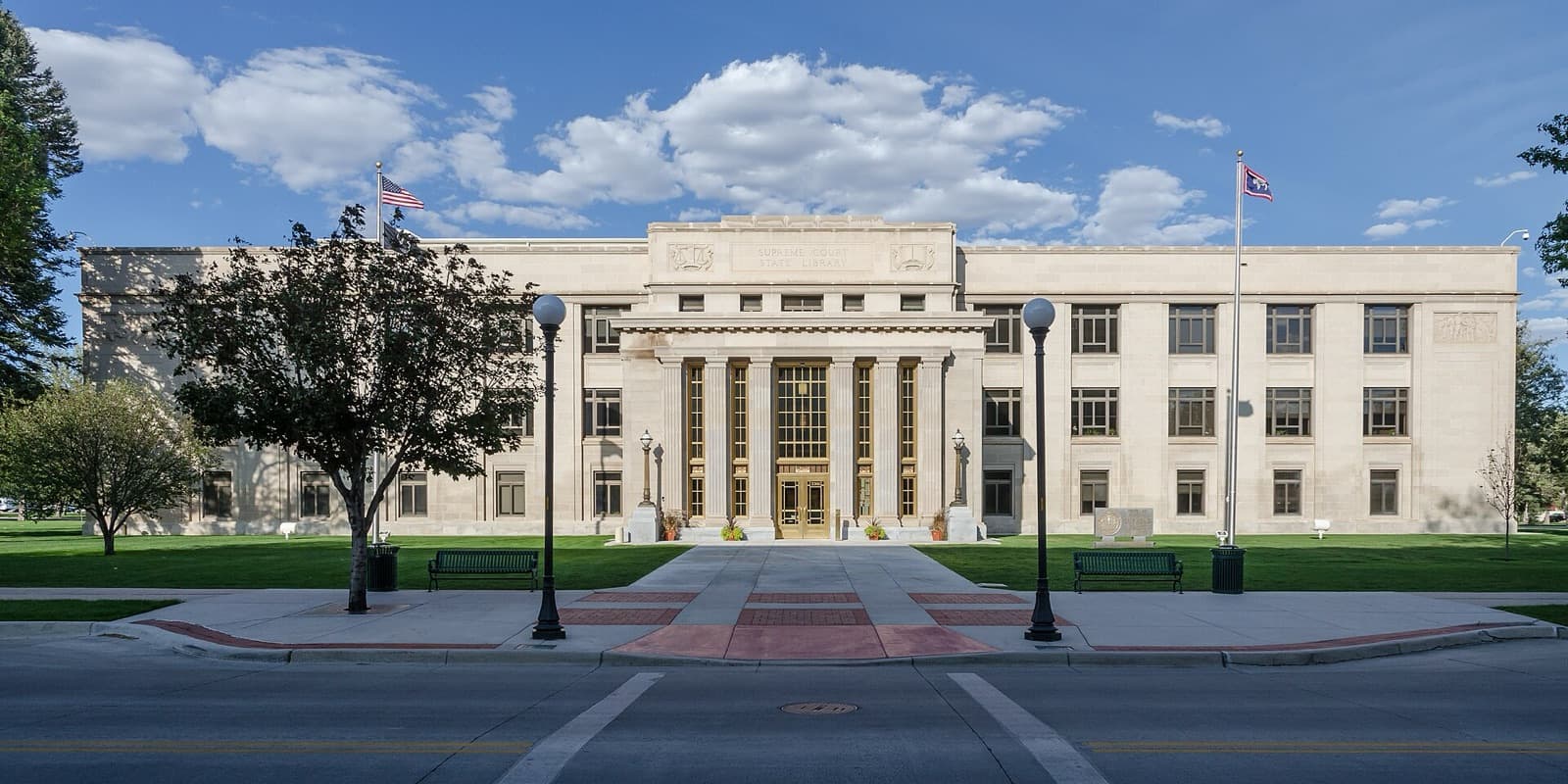
In Wyoming you generally have two years from the date of the lawyer's mistake to sue for legal malpractice. If the mistake could not reasonably have been discovered in that time, the law gives you two years from discovery instead, and a mistake discovered during the second year earns a six-month extension.
Wyoming counts from the act, not from when the representation ends, so a client who stays with the same lawyer can lose a claim without realizing it. Here is how the statute works, what you must prove, and where to go for fee disputes and missing money.
Key takeaways.
- Wyoming gives you 2 years from the date of the lawyer's act, error, or omission to sue under Wyo. Stat. § 1-3-107.
- If the mistake was not reasonably discoverable within 2 years, you have 2 years from discovery; if you discover it in the second year, you get 6 extra months.
- Wyoming has refused to adopt the continuous representation rule (Hiltz v. Robert W. Horn, P.C., 1996).
- A former criminal defendant does not have to be exonerated before suing (Dockter v. Lozano, 2020).
- The Wyoming State Bar runs fee arbitration for disputes over $500, and its Client Protection Fund pays up to $15,000 per claimant per year.
Check your Wyoming claim.
1 of 6
Six quick questions. Free, private, no obligation.
Wyoming at a glance.
Compare all states- Deadline to sue
- 2 years from the act (discovery exception)Wyo. Stat. § 1-3-107(a)
- Clock starts
- The clock starts on the date of the act, error, or omission; if it was not reasonably discoverable in 2 years, you get 2 years from discovery.
- Discovery rule
- Limited
- Paused while lawyer still represents you
- No
- Outer limit (repose)
- None
- Expert needed
- Required unless a lay person's common sense can establish the standard of care
- Certificate of merit
- Not required
- Criminal defense cases
- Exoneration is not a prerequisite (Dockter v. Lozano, 2020); actual innocence question left open
- Fee disputes
- Wyoming State Bar Fee Arbitration Program
- Stolen client money
- Client Protection Fund of the Wyoming State Bar
- Lawyer discipline
- Wyoming State Bar Office of Bar Counsel
- Malpractice insurance
- Not mandatory; no disclosure rule found in the Rules of Professional Conduct
General rules only. Tolling, exceptions, and the facts of your case can change the deadline. Verified 2026-09-23.
How long do you have to sue a lawyer in Wyoming?
Wyoming has a statute written for professional malpractice, Wyo. Stat. § 1-3-107, and it applies to lawyers. In Wyoming, a legal malpractice suit must be filed within 2 years of the date of the alleged act, error, or omission, unless the mistake was not reasonably discoverable in that time or the client failed to discover it despite due diligence, in which case the suit may be filed up to 2 years after discovery.
The statute has a second, less known rule: if the client discovers the lawyer's mistake during the second year after it happened, the Wyoming deadline is extended by 6 months. Because the discovery exception is written into the statute, it is narrower than a general discovery rule: the clock starts at the act, and the client has to prove the mistake was not reasonably discoverable.
No continuous representation rule
In Hiltz v. Robert W. Horn, P.C., 910 P.2d 566 (Wyo. 1996), a client argued that his lawyer's continued work tolled the deadline. The Wyoming Supreme Court said the continuous representation doctrine "is absent from our legal malpractice statute, and we decline to judicially adopt such a provision." It also held that when the facts show when a reasonable person was on inquiry notice, the court can decide the timing question as a matter of law.
Wyoming has no separate statute of repose for legal malpractice. See the 50-state deadline table.
What you have to prove in Wyoming
In Moore v. Lubnau, 855 P.2d 1245 (Wyo. 1993), the Wyoming Supreme Court borrowed the medical malpractice test for lawyers. A Wyoming legal malpractice plaintiff must establish the accepted standard of legal care, that the lawyer's conduct departed from that standard, and that the conduct was the legal cause of the client's injuries. That usually means proving the case within a case; see our explainer.
Moore also set the expert rule: "Expert testimony is necessary because most lay people are not competent to pass judgment on legal questions," with an exception when a lay person's common sense can establish the standard of care. The client in Moore lost on summary judgment because she offered no expert witness to answer the lawyer's experts. See our expert witness guide.
In Dockter v. Lozano, 2020 WY 119, the court held that legal malpractice is a tort when the claim is for breach of the duty created by the attorney-client relationship, not a contract claim. Wyoming does not require a certificate of merit for suits against lawyers.
Criminal defense malpractice in Wyoming
Wyoming is one of the few states that has expressly refused the exoneration rule. In Dockter v. Lozano (2020), the Wyoming Supreme Court held that exoneration is not a prerequisite for a malpractice action against a criminal defense lawyer. The court noted that some states instead require proof of actual innocence at trial, but said that question was not before it, so whether a Wyoming plaintiff must prove actual innocence remains unsettled.
Dockter involved public defenders, who are public employees generally immune from suit under the Wyoming Governmental Claims Act unless an exception applies; the court held that the claim should not have been dismissed without resolving whether insurance coverage waived that immunity. See can you sue a public defender and criminal defense malpractice.
If the problem is fees or missing money
Fee arbitration
The Wyoming State Bar runs a fee arbitration program under the Wyoming Rules for Fee Arbitration, handled by its Fee Arbitration Committee. A client starts it by filing a petition, which is forwarded to the lawyer. Wyoming fee arbitration petitions must be filed within 1 year after the lawyer-client relationship ends or the final bill is received, whichever is later, and disputes of $500 or less are not eligible. See fee dispute arbitration.
Client Protection Fund
The Client Protection Fund of the Wyoming State Bar reimburses losses from a lawyer's theft, embezzlement, or other wrongful taking of money or property in a lawyer-client relationship. It does not cover negligence, malpractice, or arguments over whether a fee was reasonable. The Wyoming fund pays up to $15,000 per claimant per calendar year, and claims must be filed within 4 years after you knew or should have known of the lawyer's dishonest conduct. See client protection funds.
Filing a complaint with the Office of Bar Counsel
Complaints about Wyoming lawyers go to the Wyoming State Bar's Office of Bar Counsel on its Ethical Violations Complaint Form. The Board of Professional Responsibility's Review and Oversight Committee decides whether formal charges are warranted, and only the Wyoming Supreme Court can order public discipline, from public censure to suspension or disbarment.
The Wyoming discipline process will not recover money damages for you. The Office of Bar Counsel also says it will not investigate fee disputes, the quality of legal advice, or claims that a criminal defense lawyer was ineffective unless a court has found ineffective assistance. See malpractice lawsuit vs. bar complaint.
Wyoming does not require lawyers to carry malpractice insurance, and we found no disclosure requirement in the Wyoming Rules of Professional Conduct. See does your lawyer have malpractice insurance.
What to do next in Wyoming
Write down the date the lawyer made the mistake and the date you first learned of it; Wyoming's statute turns on both. Get your client file (how to request it). If you are arguing late discovery, gather proof of why you could not have found the mistake sooner.
- Write a one-page timeline: when you hired the lawyer, what went wrong, when you learned of it, and when the lawyer stopped working on the matter.
- Collect the engagement letter, bills, emails, texts, and court papers. Do not rely on the lawyer to keep them for you.
- Separate money problems from outcome problems. A dispute over the bill or missing funds may belong with fee arbitration or the Client Protection Fund, not in a lawsuit.
- Estimate what the mistake actually cost you. A malpractice case has to prove real, measurable loss, and it must be worth the cost of experts.
- Talk to an independent attorney who handles legal malpractice claims in Wyoming well before the two years run out. Many take these cases on a contingency fee; see do legal malpractice lawyers work on contingency.
If you think your lawyer's mistake cost you, a free case review takes about two minutes.
Common questions.
How long do I have to sue my lawyer in Wyoming?
Two years from the date of the lawyer's act, error, or omission under Wyo. Stat. § 1-3-107. If the mistake was not reasonably discoverable within two years, you have two years from discovery, and a mistake discovered in the second year adds six months.
Does continuous representation apply in Wyoming?
No. In Hiltz v. Robert W. Horn, P.C. (1996), the Wyoming Supreme Court declined to adopt the continuous representation doctrine, so the clock can run while the same lawyer keeps working for you.
Do I need an expert to sue a lawyer in Wyoming?
Usually. Moore v. Lubnau (1993) held expert testimony is necessary to establish the standard of care unless a lay person's common sense is enough. Wyoming does not require a certificate of merit.
Do I have to be exonerated to sue my criminal defense lawyer in Wyoming?
No. Dockter v. Lozano (2020) held that exoneration is not a prerequisite. Whether a plaintiff must prove actual innocence at trial was left open.
Where do I file a complaint against a lawyer in Wyoming?
With the Wyoming State Bar Office of Bar Counsel, using the Ethical Violations Complaint Form. Discipline cannot recover money damages; fee disputes go to the bar's fee arbitration program.
Sources.
Statutes, court rules, appellate opinions, and bar publications we relied on. See our editorial standards.
- 1.Wyoming Statutes Title 1 (§ 1-3-107), Wyoming Legislature
- 2.Hiltz v. Robert W. Horn, P.C., 910 P.2d 566 (Wyo. 1996), Caselaw Access Project
- 3.Moore v. Lubnau, 855 P.2d 1245 (Wyo. 1993), Caselaw Access Project
- 4.Dockter v. Lozano, 2020 WY 119 (opinion PDF)
- 5.Wyoming State Bar, Fee Disputes
- 6.Wyoming State Bar, Client Protection Fund
- 7.Wyoming State Bar, Complain About a Lawyer's Conduct
- 8.Wyoming Rules of Professional Conduct for Attorneys at Law