New Mexico legal malpractice law
How to sue your lawyer in New Mexico.
New Mexico courts generally give you 4 years to sue a lawyer, starting when you are actually injured and discover the facts. Here is how the rules work.
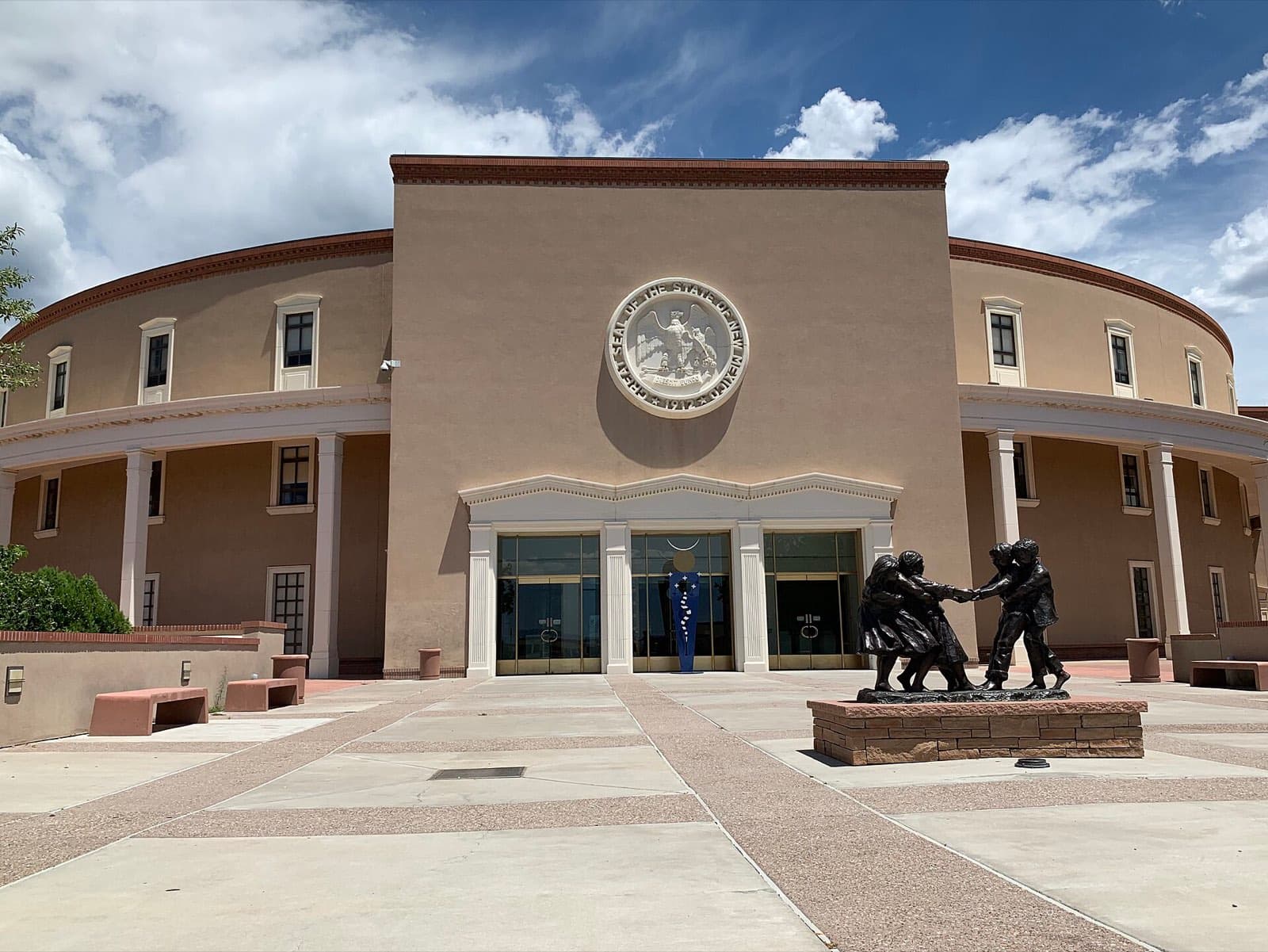
In New Mexico, you generally have 4 years to sue a lawyer for legal malpractice. The clock starts when you suffer an actual injury, such as losing a right or having a judgment entered against you, and you discover, or reasonably should discover, the facts behind the claim. New Mexico has no statute written just for lawyer malpractice, so courts use the general limitations statutes.
This page covers the deadline, what you must prove, the criminal case rule, and the State Bar programs for fee disputes and stolen money.
Key takeaways.
- New Mexico courts generally apply a 4-year statute of limitations to legal malpractice, under NMSA § 37-1-4, although one appellate decision said the 3-year versus 4-year question is not fully settled.
- The clock starts only when you have suffered actual injury and discover, or should discover, the facts of the claim.
- The New Mexico Supreme Court has not adopted the continuous representation rule, so do not count on it to extend your deadline.
- Most claims need an expert, but New Mexico courts have said no expert is needed when a lawyer simply let a filing deadline pass.
- Fee arbitration through the State Bar is free and voluntary, and theft claims to the Client Protection Fund must be filed within 5 years.
Check your New Mexico claim.
1 of 6
Six quick questions. Free, private, no obligation.
New Mexico at a glance.
Compare all states- Deadline to sue
- 4 yearsN.M. Stat. Ann. § 37-1-4
- Clock starts
- The clock starts when you sustain actual injury and discover, or with reasonable diligence should discover, the facts essential to the claim (Sharts v. Natelson).
- Discovery rule
- Yes
- Paused while lawyer still represents you
- Unsettled
- Outer limit (repose)
- None
- Expert needed
- Generally required, except for obvious errors such as ignoring a statute of limitations
- Certificate of merit
- Not required
- Criminal defense cases
- Unsettled; Duncan v. Campbell suggests the plaintiff must show innocence or that the conviction was overturned
- Fee disputes
- State Bar of New Mexico Fee Arbitration Program
- Lawyer discipline
- Disciplinary Board of the New Mexico Supreme Court
- Malpractice insurance
- Not mandatory; Rule 16-104 NMRA requires lawyers to disclose to clients if they lack professional liability insurance
General rules only. Tolling, exceptions, and the facts of your case can change the deadline. Verified 2026-09-23.
How long do you have to sue a lawyer in New Mexico?
New Mexico courts have repeatedly applied the 4-year period in NMSA 1978, § 37-1-4 to legal malpractice, including in Jaramillo v. Hood (1979) and Brown v. Behles & Davis, 2004-NMCA-028. The Court of Appeals noted in Duncan v. Campbell, 1997-NMCA-028, that parties sometimes argue the 3-year personal injury period in § 37-1-8 should apply instead, and that the question is not fully settled. New Mexico courts generally allow 4 years to sue a lawyer for malpractice, but because the 3-year argument has not been fully closed off, filing within 3 years is the cautious approach.
When the clock starts
In Sharts v. Natelson, 118 N.M. 721, 885 P.2d 642 (1994), the New Mexico Supreme Court held that the limitations period for legal malpractice commences when (1) the client sustains actual injury and (2) the client discovers, or through reasonable diligence should discover, the facts essential to the cause of action. Actual injury means the loss of a right, remedy, or interest, or the imposition of a liability. You only need to know that damage occurred, not how much. This is New Mexico's discovery rule.
Continuous representation
The continuous representation rule would pause the clock while the same lawyer keeps working on the matter. The New Mexico Supreme Court declined to adopt it in Sharts, partly because it would not have changed the result, and a 2020 federal appeals decision applying New Mexico law held it does not toll the deadline. Do not rely on it. New Mexico has no separate statute of repose for legal malpractice. See our 50-state deadline table.
What you have to prove in New Mexico
The New Mexico Supreme Court stated the elements in Rancho del Villacito Condominiums, Inc. v. Weisfeld, 121 N.M. 52, 908 P.2d 745 (1995): (1) the employment of the defendant attorney, (2) the attorney's neglect of a reasonable duty, and (3) that the negligence resulted in and was the proximate cause of loss to the plaintiff. Proving loss usually means the case within a case. A bad result on its own is not malpractice; a reasonable strategic decision that did not work out is not negligence. The focus is whether the lawyer neglected a reasonable duty and whether that neglect changed the outcome. See what is not legal malpractice. See the case within a case, explained.
Expert testimony
New Mexico has no certificate of merit requirement for lawyer cases, but courts have held that the plaintiff must establish through expert testimony that the attorney failed to use the skill, prudence, and diligence of an attorney of ordinary skill and capacity. There is an exception for obvious neglect. New Mexico courts do not require expert testimony to prove negligence when a lawyer ignored the applicable statute of limitations and let the client's claim die. If your lawyer missed a filing deadline, that exception may matter. See our expert witness guide.
Criminal defense malpractice in New Mexico
New Mexico has not squarely decided whether a former criminal defendant must be exonerated before suing. In Duncan v. Campbell, 1997-NMCA-028, 123 N.M. 181, the Court of Appeals held the ordinary discovery rule applies, so the clock began when the client realized his lawyer had erred. The court also said that, unlike in ordinary cases, a criminal malpractice plaintiff must show the predicament was not of the plaintiff's own making, and the lawyer may defend by showing, for example, that the plaintiff really is guilty or that the conviction has not been overturned.
In New Mexico, a criminal malpractice claim may start running when you discover the lawyer's error, even before postconviction relief, so waiting for exoneration can cost you the claim. Actual innocence is likely to be an issue. See criminal defense malpractice and ineffective assistance versus malpractice.
If the problem is fees or missing money
The State Bar of New Mexico Fee Arbitration Program is free for both clients and lawyers, but it is voluntary: neither side has to participate. If both agree, the arbitrator's written decision is binding. Disputes from $1,000 to $25,000 go to a single arbitrator, and above $25,000 either side can ask for a three-arbitrator panel. You file a Petition for Fee Arbitration by email, and the lawyer has 30 days to return a signed agreement. It does not handle malpractice or court-ordered fees. See fee dispute arbitration.
The Client Protection Fund, run by the State Bar's Commission on Client Protection, reimburses losses caused by the dishonest conduct of New Mexico lawyers arising from a client-lawyer or fiduciary relationship. A claim to New Mexico's Client Protection Fund must be filed no later than 5 years after you knew or should have known of the lawyer's dishonest conduct. The bar's page does not publish a per-claim cap. See our client protection fund guide.
Filing a grievance with the Disciplinary Board
Complaints about New Mexico lawyers go to the Disciplinary Board of the New Mexico Supreme Court, which investigates and prosecutes violations of the Rules of Professional Conduct. What discipline cannot do is pay you for your losses or decide a malpractice claim. A New Mexico bar grievance does not stop the malpractice clock, so file any lawsuit on its own timeline. See malpractice versus a bar complaint.
New Mexico does not require lawyers to carry malpractice insurance. Under Rule 16-104 NMRA, a lawyer without professional liability insurance must notify clients, and lawyers certify their coverage status to the State Bar.
What to do next in New Mexico
- Identify the injury date: when you lost a right, had a judgment entered, or took on a liability, and when you learned of it.
- Get your client file. See how to get your case file.
- Do not wait on the lawyer to fix it. New Mexico has not adopted continuous representation, so the clock may be running now.
- Match the problem to the remedy: the State Bar Fee Arbitration Program for a bill (if the lawyer agrees to take part), the Client Protection Fund for money a lawyer took, the Disciplinary Board for ethics violations, and a lawsuit for losses caused by negligence. None of these programs pauses the malpractice deadline.
If you think your lawyer's mistake cost you, a free case review takes about two minutes and can connect you with an independent attorney in New Mexico who handles legal malpractice claims.
Common questions.
How long do I have to sue my lawyer in New Mexico?
New Mexico courts generally apply the 4-year statute in NMSA § 37-1-4. The period starts when you suffer actual injury and discover, or reasonably should discover, the facts of the claim. Because one appellate court called the 3-year versus 4-year question unsettled, acting within 3 years is the cautious approach.
Does the deadline wait while my lawyer is still representing me in New Mexico?
Probably not. The New Mexico Supreme Court declined to adopt the continuous representation rule in Sharts v. Natelson, and a federal appeals court applying New Mexico law held it does not toll the deadline.
Do I need an expert to sue a lawyer in New Mexico?
Usually. New Mexico courts require expert testimony on the standard of care, but not when the lawyer's error is obvious, such as ignoring the statute of limitations on the client's claim.
Can I sue my criminal defense lawyer in New Mexico?
Possibly, but the rules are not fully settled. The Court of Appeals has said the clock starts when you discover the error, and that a plaintiff must show the outcome was not of their own making; a lawyer can defend by pointing to actual guilt or an unreversed conviction.
Where do I file a complaint against a lawyer in New Mexico?
File with the Disciplinary Board of the New Mexico Supreme Court. It can discipline lawyers but does not award money or decide malpractice claims.
Is fee arbitration mandatory in New Mexico?
No. The State Bar of New Mexico Fee Arbitration Program is free but voluntary for both sides. If both agree to participate, the arbitrator's decision is binding.
Sources.
Statutes, court rules, appellate opinions, and bar publications we relied on. See our editorial standards.
- 1.Modrall Sperling, Legal Malpractice in New Mexico (survey of statutes and cases)
- 2.Paschos Law, statute of limitations in legal malpractice cases: a nationwide examination (Brown v. Behles; Sharts)
- 3.Hinshaw, Tenth Circuit: continuous representation doctrine does not toll New Mexico malpractice statute
- 4.Amending the Peeler Doctrine, 56 Hous. L. Rev. 927 (2019) (Duncan v. Campbell)
- 5.State Bar of New Mexico, Fee Arbitration
- 6.State Bar of New Mexico, Client Protection Fund
- 7.State Bar of New Mexico, Client Protection and Fee Arbitration
- 8.State Bar of New Mexico, Lawyers Professional Liability Committee rules and orders (Rule 16-104 NMRA)
- 9.Disciplinary Board of the New Mexico Supreme Court