Kansas legal malpractice law
How to sue your lawyer in Kansas.
Kansas gives you 2 years from substantial injury or when injury is reasonably ascertainable, and never more than 10 years from the act. Learn the rules here.
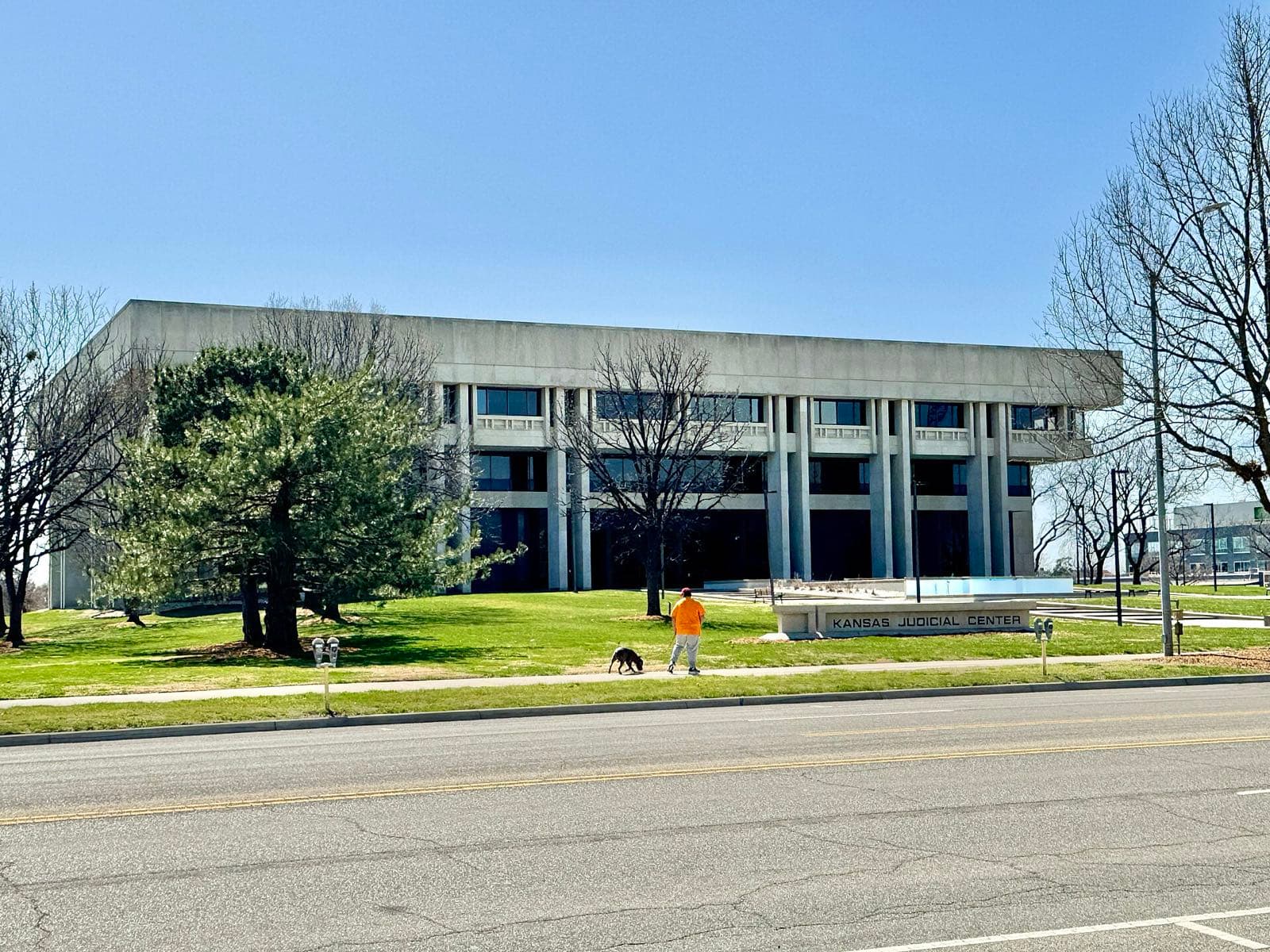
In Kansas you generally have 2 years to sue your lawyer for legal malpractice, counted from when the mistake first causes substantial injury or, if you could not have known at first, from when the injury becomes reasonably ascertainable. No suit may be brought more than 10 years after the lawyer's act.
Kansas courts pick the accrual rule that fits the facts, which can help or hurt. This page covers the deadline, what you have to prove, the criminal-case rule, and where to go for fee disputes and stolen money.
Key takeaways.
- Kansas gives you 2 years to sue a lawyer, under K.S.A. 60-513(a)(4).
- The clock starts when the mistake first causes substantial injury or when the injury becomes reasonably ascertainable, but never more than 10 years after the act.
- Kansas courts apply a continuous representation rule in the right facts, so the deadline can wait until the lawyer's work on the matter ends.
- Former criminal defendants must be exonerated first, but the Kansas Supreme Court rejected an actual innocence requirement in 2015.
- The Lawyers' Fund for Client Protection pays up to $125,000 per claim, and claims are due within 1 year.
Check your Kansas claim.
1 of 6
Six quick questions. Free, private, no obligation.
Kansas at a glance.
Compare all states- Deadline to sue
- 2 years from injury, 10-year reposeK.S.A. 60-513(a)(4), (b)
- Clock starts
- The 2 years start when the lawyer's act first causes substantial injury or, if the injury is not reasonably ascertainable at first, when it becomes reasonably ascertainable.
- Discovery rule
- Yes
- Paused while lawyer still represents you
- Yes
- Outer limit (repose)
- 10 years from the act (K.S.A. 60-513(b))
- Expert needed
- Generally required, with a common knowledge exception
- Certificate of merit
- Not required
- Criminal defense cases
- Must be exonerated (relief from conviction); actual innocence not required (Mashaney)
- Fee disputes
- No statewide program; local committees such as the Sedgwick County (Wichita Bar) Fee Dispute Committee
- Stolen client money
- Kansas Lawyers' Fund for Client Protection
- Lawyer discipline
- Kansas Office of the Disciplinary Administrator
- Malpractice insurance
- Not mandatory; lawyers in private practice certify coverage at registration and it is public (Rule 207)
General rules only. Tolling, exceptions, and the facts of your case can change the deadline. Verified 2026-09-23.
How long do you have to sue a lawyer in Kansas?
The Kansas Supreme Court treats legal malpractice as a tort governed by the 2-year statute of limitations in K.S.A. 60-513(a)(4), as it explained in Pancake House, Inc. v. Redmond, 239 Kan. 83 (1986), and repeated in Mashaney v. Board of Indigents' Defense Services, 302 Kan. 625 (2015). Subsection (b) sets the start date. In Kansas, a legal malpractice claim must be filed within 2 years after the lawyer's act first causes substantial injury or the injury becomes reasonably ascertainable, and never more than 10 years after the act.
Four ways to start the clock
Pancake House described four accrual theories: the occurrence rule, the damage rule, the discovery rule, and the continuous representation rule, under which the claim does not accrue until the attorney-client relationship ends. Which one applies depends on the facts of each case.
Continuous representation
Kansas appellate courts have applied the continuous representation rule to lawyers. In Pittman v. McDowell, Rice & Smith, Chtd., 12 Kan. App. 2d 603 (1988), it tolled the limitations period until the client fired a lawyer who kept promising to fix a missing journal entry. In Morrison v. Watkins, 20 Kan. App. 2d 411 (1995), the court recognized the rule for a lawyer serving as trustee, weighed whether hiring a new lawyer who advised firing the old ones cut it off, and held it could not stretch past the 10-year repose. In Kansas, continuous representation can delay the 2-year malpractice deadline, but it does not extend the 10-year statute of repose.
The 10-year repose
The last clause of 60-513(b) is a statute of repose: "in no event" may an action be brought more than 10 years after the act. Compare other states in the 50-state deadline table.
What you have to prove in Kansas
A Kansas malpractice plaintiff generally must prove the lawyer owed a duty, breached the standard of care, caused the loss, and that the client suffered actual damages. For mistakes in litigation, Kansas courts require proof that the client would have succeeded in the underlying lawsuit but for the lawyer's error, the case within a case. See the case within a case explained.
Expert testimony
In Bowman v. Doherty, 235 Kan. 870 (1984), the Kansas Supreme Court said expert testimony is generally required to prove the standard of care and whether the lawyer deviated from it, with a common knowledge exception for questions an ordinary person can judge. Williamson v. Amrani, 283 Kan. 227 (2007), found a claim too complex to fall within that exception. Kansas malpractice plaintiffs generally need an expert witness unless the lawyer's error is within the common knowledge of ordinary jurors. Kansas does not require a certificate of merit to file. See legal malpractice expert witnesses.
Criminal defense malpractice in Kansas
In Canaan v. Bartee, 276 Kan. 116 (2003), the Kansas Supreme Court adopted the exoneration rule: a person convicted in a criminal case must obtain postconviction relief before suing former defense counsel for malpractice. In Mashaney (2015), the court filled in the details. In Kansas, a criminal malpractice claim accrues on the date a court grants relief from the conviction on the basis of ineffective assistance of counsel, and the client does not have to prove actual innocence.
The facts show why the date matters. Mashaney's convictions were set aside on a K.S.A. 60-1507 motion on April 11, 2011. The court treated that grant of relief as the exoneration date, and because he sued within 2 years of it, and within 10 years of the lawyers' conduct, his claim was timely. The court declined to wait for later proceedings in the criminal case to finish.
The court expressly rejected the actual innocence rule, and it left open whether a lawyer can argue actual guilt as a defense or a causation issue. Because the 2 years run from the grant of relief, note that date carefully. See criminal defense malpractice and ineffective assistance vs. legal malpractice.
If the problem is fees or missing money
Fee disputes
The Kansas Judicial Branch says there is currently no statewide fee dispute committee. Local options include the Sedgwick County Fee Dispute Committee (316-263-2251) and the Topeka Bar Association Fee Dispute Committee for Shawnee County (785-233-3945). In litigated cases, you can also ask the court handling the case to review whether the fee contract is reasonable. See attorney fee dispute arbitration and overbilling and fee disputes.
Lawyers' Fund for Client Protection
The Lawyers' Fund for Client Protection, run by the Client Protection Fund Commission under Supreme Court Rule 241, pays for losses when an active Kansas lawyer misappropriates client money or property during a lawyer-client relationship. The Kansas Lawyers' Fund for Client Protection limits payment to $125,000 per claim and $350,000 for all claims against any one lawyer. You file a complaint with the Disciplinary Administrator first, then the claim. Claims are due within 1 year after you knew or should have known of the dishonest conduct, and there is no fee. It does not cover negligence, fee disputes, or malpractice. See stolen client funds.
Filing a grievance with the Disciplinary Administrator
Complaints go to the Office of the Disciplinary Administrator in Topeka (785-435-8200, attydisc@kscourts.gov). Complaints are investigated by local bar associations or the office's staff, reviewed by a committee of three attorneys, and may go to a hearing panel and the Kansas Supreme Court.
The court is direct about the limits: the Kansas disciplinary process does not recover funds from lawyers or settle fee disputes, and complainants should not expect money damages. A bar grievance also does not pause your malpractice deadline. See legal malpractice vs. a bar complaint.
Kansas does not require malpractice insurance, but under Supreme Court Rule 207 each active lawyer in private practice must certify at annual registration whether they carry it, report any lapse within 30 days, and the information is made public.
What to do next in Kansas
- Note three dates. When the lawyer acted, when you were first hurt or could have known, and when the representation ended.
- Get your file. Request your complete client file in writing. See how to get your case file.
- Act quickly on theft. The client protection fund's 1-year deadline is short, and you must file a disciplinary complaint first.
- Check insurance. Under Rule 207, whether a lawyer in private practice reports coverage is public information.
If you think your lawyer's mistake cost you, a free case review takes about two minutes and can connect you with an independent attorney in Kansas who handles legal malpractice claims.
Common questions.
How long do I have to sue my lawyer in Kansas?
Generally 2 years under K.S.A. 60-513(a)(4), starting when the lawyer's act first causes substantial injury or the injury becomes reasonably ascertainable. No action may be brought more than 10 years after the act.
Does Kansas use the continuous representation rule for lawyers?
Yes, in the right facts. Kansas appellate courts have held the claim may not accrue until the attorney-client relationship on that matter ends, though courts will ask whether hiring a new lawyer to review the problem ended it. It does not extend the 10-year repose.
Do I need an expert to sue a lawyer in Kansas?
Generally yes. The Kansas Supreme Court held in Bowman v. Doherty (1984) that expert testimony is generally required to prove the standard of care, unless the issue is within the common knowledge of jurors.
Can I sue my criminal defense lawyer in Kansas?
Only after a court grants relief from your conviction based on ineffective assistance of counsel. In Mashaney (2015), the Kansas Supreme Court held the claim accrues on that date and rejected an actual innocence requirement.
Where do I file a complaint against a lawyer in Kansas?
With the Office of the Disciplinary Administrator in Topeka, at 785-435-8200 or attydisc@kscourts.gov. The disciplinary process does not recover money or settle fee disputes.
How much can the Kansas client protection fund pay?
Up to $125,000 per claim and $350,000 total for claims against one lawyer. Claims must be filed within 1 year after you knew or should have known of the lawyer's dishonest conduct.
Sources.
Statutes, court rules, appellate opinions, and bar publications we relied on. See our editorial standards.
- 1.K.S.A. 60-513 (Kansas Revisor of Statutes)
- 2.Mashaney v. Board of Indigents' Defense Services, 302 Kan. 625 (2015) (Google Scholar)
- 3.Pancake House, Inc. v. Redmond, 239 Kan. 83 (1986) (Google Scholar)
- 4.Morrison v. Watkins, 20 Kan. App. 2d 411 (1995) (Google Scholar)
- 5.Pittman v. McDowell, Rice & Smith, Chtd., 12 Kan. App. 2d 603 (1988) (Google Scholar)
- 6.Bowman v. Doherty, 235 Kan. 870 (1984) (Google Scholar)
- 7.Williamson v. Amrani, 283 Kan. 227 (2007) (Google Scholar)
- 8.Canaan v. Bartee, 276 Kan. 116 (2003) (Google Scholar)
- 9.Kansas Judicial Branch: Attorney Complaint Process
- 10.Kansas Judicial Branch: Lawyers' Fund for Client Protection
- 11.Kansas Supreme Court Rule 207