District of Columbia legal malpractice law
How to sue your lawyer in District of Columbia.
DC gives you 3 years to sue a lawyer, starting when you knew or should have known of the injury, its cause, and wrongdoing, and paused during representation.
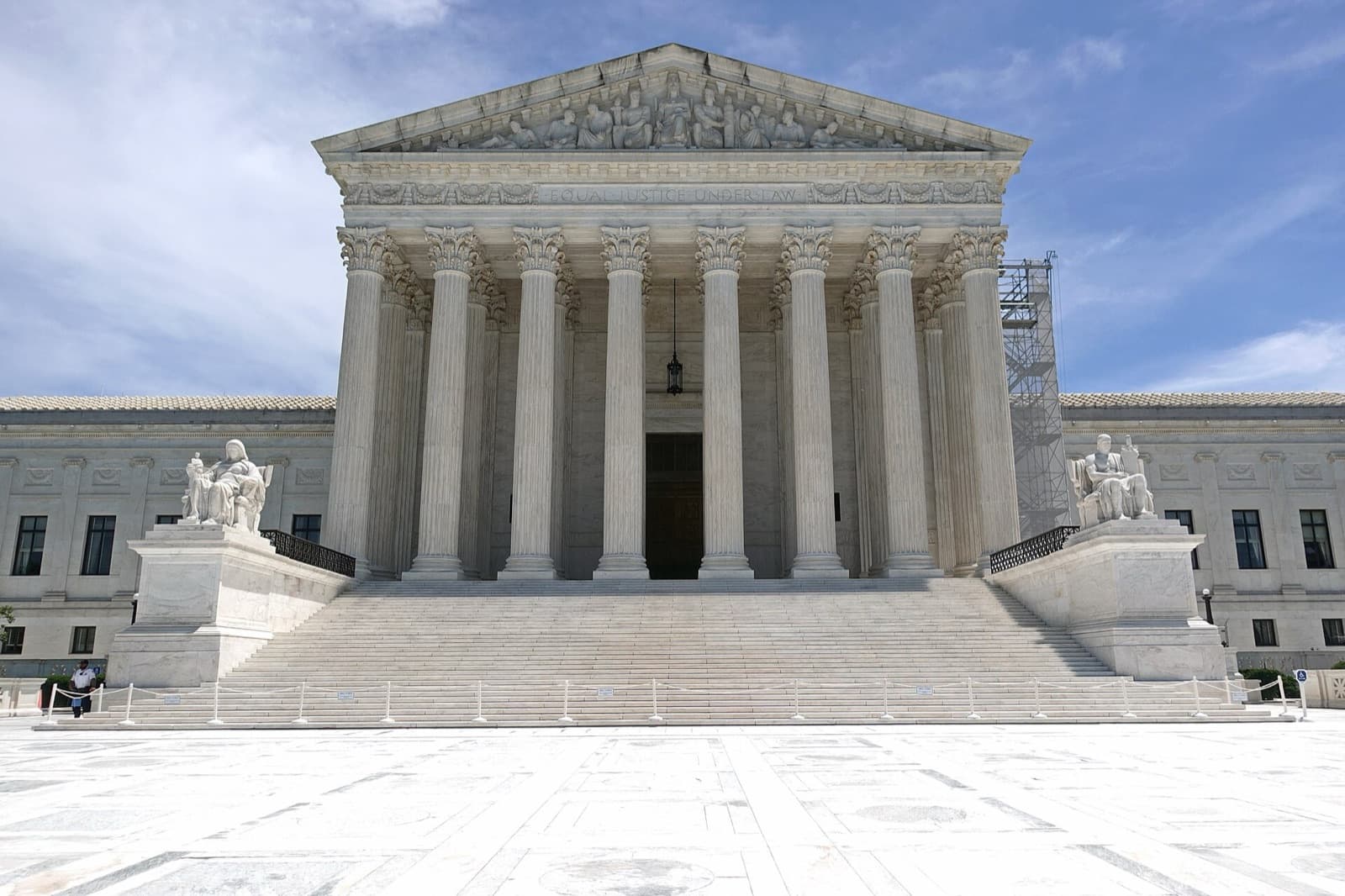
In the District of Columbia, you generally have three years to sue a lawyer for legal malpractice, and the clock does not start until you knew or should have known of the injury, what caused it, and some evidence of wrongdoing. DC also pauses the clock while the lawyer keeps representing you in the matter.
That makes DC more forgiving on timing than many states. The harder parts are proving the lawyer's choice was negligent rather than a reasonable judgment call, and showing the mistake changed the outcome. Here is how each piece works in DC.
Key takeaways.
- In the District of Columbia, you generally have 3 years to sue a lawyer for malpractice, counted from when you knew or should have known of the injury, its cause, and some evidence of wrongdoing.
- DC applies the continuous representation rule, so the clock is tolled while the lawyer still represents you in the matter.
- Lawyers are protected for reasonable judgment calls under the judgmental immunity doctrine from Biomet v. Finnegan Henderson (2009).
- The D.C. Bar's Attorney/Client Arbitration Board handles fee disputes.
- The Clients' Security Fund reimburses up to $100,000 for losses from a lawyer's dishonest conduct, not for malpractice.
Check your District of Columbia claim.
1 of 6
Six quick questions. Free, private, no obligation.
District of Columbia at a glance.
Compare all states- Deadline to sue
- 3 yearsD.C. Code § 12-301(8)
- Clock starts
- The three years start when you knew or reasonably should have known of the injury, its cause in fact, and some evidence of wrongdoing.
- Discovery rule
- Yes
- Paused while lawyer still represents you
- Yes
- Outer limit (repose)
- None
- Expert needed
- Generally required, unless the lack of care is obvious enough to judge by common knowledge
- Certificate of merit
- Not required (no statute found)
- Criminal defense cases
- Unsettled: no controlling D.C. Court of Appeals rule verified
- Stolen client money
- D.C. Bar Clients' Security Fund
- Lawyer discipline
- D.C. Office of Disciplinary Counsel
- Malpractice insurance
- Not mandatory; no client disclosure rule verified
General rules only. Tolling, exceptions, and the facts of your case can change the deadline. Verified 2026-09-23.
How long do you have to sue a lawyer in DC?
DC has no statute written just for legal malpractice. Claims fall under D.C. Code § 12-301(8), which sets a three year statute of limitations for actions "for which a limitation is not otherwise specially prescribed." In the District of Columbia, a legal malpractice suit must be filed within 3 years after the claim accrues under D.C. Code § 12-301(8).
Accrual works in two steps:
- Injury. A malpractice claim accrues when the client sustains some actual injury, even before the full amount of damages is known.
- Discovery rule. Where the injury is hard to pin down, DC courts hold that the claim accrues when the plaintiff knows, or through reasonable diligence should know, of the injury, its cause in fact, and some evidence of wrongdoing. The D.C. Court of Appeals applied that test in Bleck v. Power, 955 A.2d 712 (D.C. 2008).
Two tolling rules can extend the time:
- Continuous representation. DC adopted the rule in R.D.H. Communications, Ltd. v. Winston, 700 A.2d 766 (D.C. 1997). The statute is tolled while the attorney continues to represent the client.
- Fraudulent concealment. The statute may also be tolled if the lawyer concealed facts that would have put the client on notice, as recognized in Weisberg v. Williams, Connolly & Califano (D.C. 1978).
We found no statute of repose for legal malpractice in DC. Once DC's 3 year period runs from accrual, the statute of limitations is a complete bar to the malpractice claim. Compare DC with the states in our deadline table.
DC deadline rules at a glance
| Rule | DC |
|---|---|
| Deadline | 3 years (§ 12-301(8)) |
| Clock starts | Knowledge of injury, cause, and some wrongdoing |
| Same lawyer still representing you | Clock tolled (R.D.H. Communications) |
| Concealment by the lawyer | Can toll the clock (Weisberg) |
What you have to prove in DC
Legal malpractice in DC sounds in negligence. You must prove an attorney-client relationship, the applicable standard of care, a breach of that standard, and a causal link between the breach and your damages. When the mistake happened in a lawsuit, that means proving the case within a case: what you would have recovered if the lawyer had handled it competently.
In DC, expert testimony is generally required to prove what a lawyer should have done, unless the lack of care is so obvious that a jury can find negligence as a matter of common knowledge. DC has no certificate of merit requirement, but you should expect to need an expert witness. See our expert guide.
DC also protects reasonable judgment calls. In Biomet Inc. v. Finnegan Henderson LLP, 967 A.2d 662 (D.C. 2009), the D.C. Court of Appeals adopted the attorney judgment rule: a lawyer is not liable for an error of professional judgment made with reasonable care, such as a reasoned call on an unsettled point of law. The question is whether the decision was reasonable when made, not whether another strategy would have worked better. DC also allows the lawyer to raise the client's own contributory negligence as a defense. Read what is not legal malpractice before you file.
Damages usually mean the money you lost because of the mistake: the recovery you would have won in the original case, extra fees you paid another lawyer to fix the problem, or the value of a deal or right the lawyer let slip away. A clear error that caused no measurable loss usually does not support a malpractice claim.
Criminal defense malpractice in DC
Many states require a former criminal defendant to have the conviction overturned, and sometimes to prove actual innocence, before suing a defense lawyer. We did not find a D.C. Court of Appeals decision adopting or rejecting that rule, so treat it as unsettled. The ordinary elements still apply, including proof that a competent defense would have produced a better result.
A former criminal defendant in DC should not assume the 3 year malpractice clock waits for an appeal or post-conviction ruling. See criminal defense malpractice and ineffective assistance vs. malpractice.
If the problem is fees or missing money
The D.C. Bar's Fee Dispute Program runs through its Attorney/Client Arbitration Board (ACAB). You start fee arbitration by filing a Petition to Arbitrate a Fee Dispute, and the process follows the ACAB Fee Arbitration Service Rules of Procedure. Filing fees apply, and hearings can be held remotely. The bar also has an ethics opinion on mandatory arbitration clauses in fee agreements, so read your engagement letter. See our fee arbitration guide.
If a lawyer took your money, apply to the Clients' Security Fund, DC's client protection fund, which operates through five trustees appointed by the D.C. Court of Appeals. The D.C. Bar Clients' Security Fund reimburses clients up to $100,000 for losses caused by the dishonest conduct of D.C. Bar members. Dishonest conduct basically means theft, such as embezzlement or conversion. It does not include negligent, inadequate, or ineffective legal work. You must also have tried other ways to recover the loss first, including asking the lawyer to repay. See stolen client funds.
Filing a grievance with the Office of Disciplinary Counsel
The Office of Disciplinary Counsel (ODC) was created by the District of Columbia Court of Appeals to investigate and prosecute complaints of ethical misconduct by DC-licensed lawyers. The D.C. Bar suggests first trying to resolve the issue by telling the lawyer your concerns clearly and asking for a response. If that fails, you can file a bar grievance with ODC.
ODC cannot represent you, give you legal advice, or change the outcome of a court decision. A DC disciplinary complaint can lead to discipline, but only a malpractice suit, fee arbitration, or the Clients' Security Fund can get money back to you. See malpractice vs. a bar complaint.
What to do next in DC
- Write down when you first knew of the injury, its cause, and signs of wrongdoing. That likely started your three years.
- Note when the lawyer stopped representing you in the matter.
- Request your client file. See how to get your case file.
- Keep the engagement letter; it may contain an arbitration clause.
What to gather before you talk to a lawyer
- The engagement letter or fee agreement.
- Every bill and proof of payment.
- Emails, texts, and letters with the lawyer, especially anything about deadlines or case status.
- Court papers from the original matter, including any dismissal order or judgment.
- A short timeline: when you hired the lawyer, when the mistake happened, when you found out, and when the lawyer stopped working for you.
A malpractice lawyer will usually check that timeline against the DC deadline first, because a late claim cannot be saved no matter how strong it is.
If you think your lawyer's mistake cost you, a free case review takes about two minutes and can connect you with an independent attorney who handles legal malpractice claims in the District of Columbia.
Common questions.
How long do I have to sue my lawyer in DC?
Generally three years under D.C. Code § 12-301(8). The clock starts when you knew or should have known of the injury, its cause, and some evidence of wrongdoing, and it is tolled while the lawyer continues to represent you.
Does DC follow the continuous representation rule?
Yes. The D.C. Court of Appeals adopted it in R.D.H. Communications v. Winston (1997). The statute of limitations is tolled while the attorney continues to represent the client.
Do I need an expert to sue a lawyer in DC?
Usually. DC generally requires expert testimony on the standard of care unless the lack of care is obvious enough for a jury to judge from common knowledge. There is no certificate of merit requirement.
Where do I file a complaint against a lawyer in DC?
File with the Office of Disciplinary Counsel, which investigates and prosecutes ethical misconduct for the D.C. Court of Appeals. ODC cannot represent you, give legal advice, or change a court decision.
How much can the DC Clients' Security Fund pay?
Up to $100,000 for losses caused by the dishonest conduct of a D.C. Bar member. It does not cover negligent or ineffective legal work, and you must first try other ways to recover the money.
Sources.
Statutes, court rules, appellate opinions, and bar publications we relied on. See our editorial standards.
- 1.D.C. Code § 12-301 (Council of the District of Columbia)
- 2.Eccleston & Wolf, An Overview of Legal Malpractice in the District of Columbia (2021)
- 3.Primerus, Legal Malpractice Compendium (District of Columbia section, citing Bleck v. Power, R.D.H. Communications v. Winston, Weisberg, Biomet)
- 4.D.C. Bar, Fee Dispute Program (Attorney/Client Arbitration Board)
- 5.D.C. Bar, Clients' Security Fund
- 6.D.C. Bar, Office of Disciplinary Counsel: Filing a Complaint