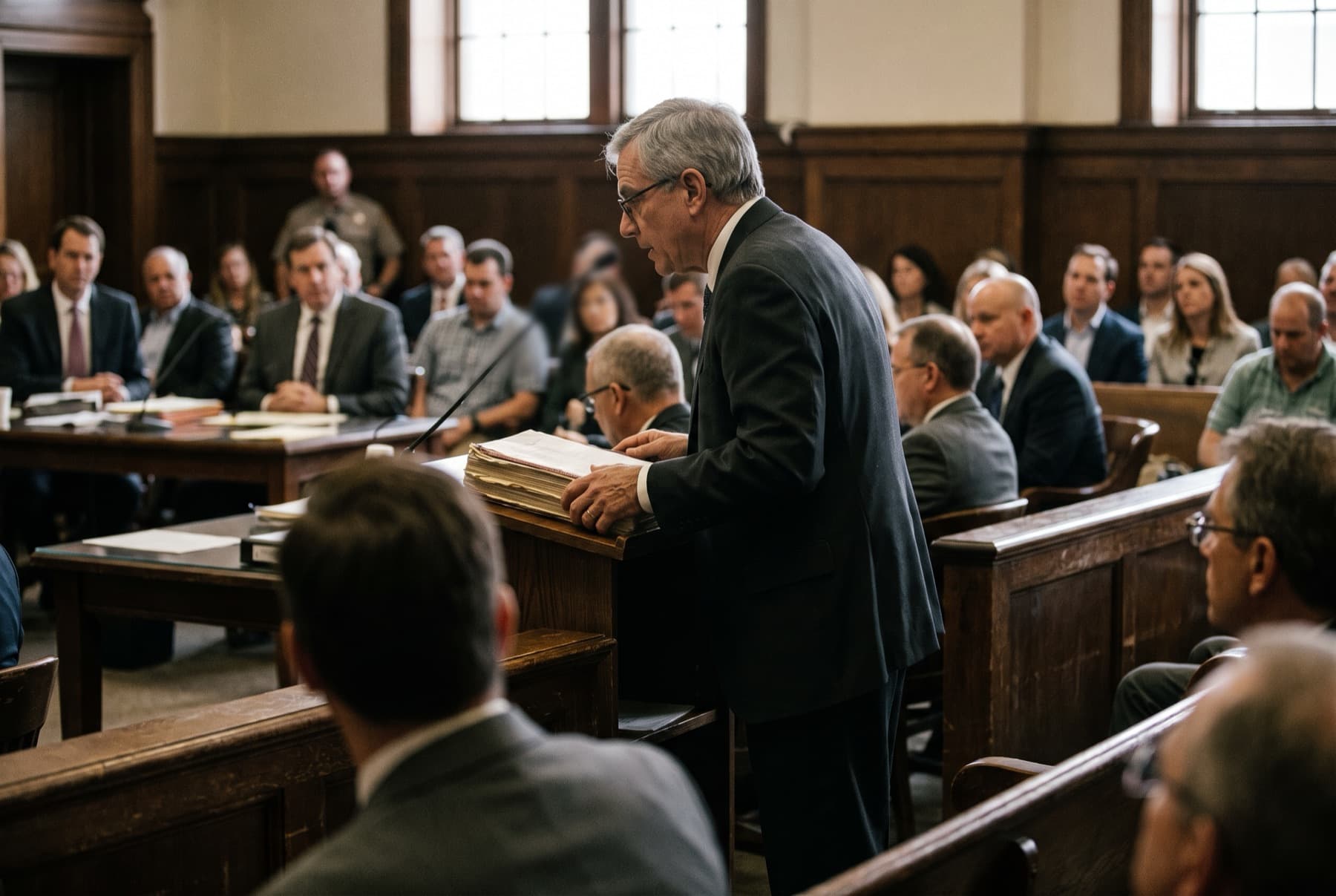
Malpractice by type of case
Can You Sue Your Bankruptcy Lawyer for Malpractice?
A bankruptcy lawyer who left debts off your schedules or got your case dismissed may owe you damages, and federal law lets the court claw back excessive fees.

Yes. If your bankruptcy lawyer left a debt off your schedules so it was not discharged, got your case dismissed by failing to file required documents, missed a deadline that cost you a home or car, or gave advice that led to a denied discharge, you may be able to sue for malpractice. You may also have faster remedies inside the bankruptcy court itself, including fee review and a federal statute aimed at consumer bankruptcy lawyers.
Bankruptcy practice is packed with deadlines, which is why it produces a steady stream of claims.
Key takeaways.
- Collections and bankruptcy drew 8.84 percent of malpractice claims in the ABA's 2020 to 2023 Profile, fifth among practice areas.
- Bankruptcy has its own fee check: under 11 U.S.C. § 329, the bankruptcy court can cancel a debtor's lawyer's fee agreement or order a refund to the extent the fee exceeds the reasonable value of the work.
- Consumer bankruptcy lawyers are debt relief agencies (Milavetz, 2010), and 11 U.S.C. § 526 makes them liable for fees, actual damages, and attorney fees if a case is dismissed because they negligently failed to file a required document.
- A malpractice claim that existed when you filed may be property of your bankruptcy estate, which can affect who controls it.
- You still have to prove the error changed the outcome. In Nelson v. Taoka (Ohio App. 1992), debtors lost because they could not show they would have reorganized successfully.
See if you have a case.
1 of 6
Six quick questions. Free, private, no obligation.
Warning signs.
- A debt you told your lawyer about was left off your schedules and was not discharged.
- Your case was dismissed because the lawyer did not file required papers or attend a hearing.
- You lost a car or house after the lawyer missed a deadline or failed to respond to a motion for relief from the automatic stay.
- Your discharge was denied or challenged over something the lawyer should have warned you about.
- An exemption you qualified for was not claimed, and the trustee took the property.
- The lawyer had you sign a reaffirmation agreement you did not understand.
- The fee you paid was never disclosed to the court, or seems far out of line with the work done.
What to gather.
- Your fee agreement and proof of every payment.
- The petition, schedules, and statement of financial affairs as filed.
- The lawyer's disclosure of compensation filed with the court.
- The docket, including any dismissal order, stay relief order, or discharge order.
- Your list of debts and assets as you gave them to the lawyer.
- Letters and emails with the lawyer about deadlines, exemptions, and reaffirmation.
- Collection letters or lawsuits on debts you believed were discharged.
What bankruptcy lawyer malpractice looks like
Bankruptcy is a deadline-heavy practice. Claims often come from debts left off the schedules, exemptions not claimed, required documents not filed, deadlines missed for objecting to claims or responding to motions, and advice about reaffirming a debt that turned out badly.
In the ABA's Profile of Legal Malpractice Claims covering 2020 to 2023, collections and bankruptcy accounted for 8.84 percent of claims, fifth among all practice areas. That is close to the 9.20 percent share the ABA reported for the same category in its 2011 study, cited in a 2015 malpractice presentation posted by the U.S. Bankruptcy Court for the Western District of Wisconsin.
An older published example: in Hutchinson v. Smith (Miss. 1982), Chapter 7 debtors sued their lawyer for failing to schedule priority tax claims and related errors, leaving $900 in local taxes and $737 in IRS penalties and interest undischarged. The court did not reach the merits, but held that the longer tort statute of limitations applied.
Remedies inside the bankruptcy court
Before filing a malpractice suit, look at the tools the Bankruptcy Code already gives you. They can be faster and cheaper.
Under 11 U.S.C. § 329, a debtor's lawyer must disclose to the bankruptcy court what they were paid or promised within one year before the filing, and if the compensation exceeds the reasonable value of the services, the court may cancel the agreement or order the excess returned. You can ask the court, or the U.S. Trustee, to review the fee.
Consumer debtors have a second tool. The U.S. Supreme Court held in Milavetz, Gallop & Milavetz v. United States (2010) that lawyers who provide bankruptcy assistance to consumers are debt relief agencies under federal law. Under 11 U.S.C. § 526(c)(2), a debt relief agency is liable for the fees it received, actual damages, and reasonable attorney fees if a client's case is dismissed or converted because the agency intentionally or negligently failed to file a required document, or if it intentionally or negligently disregarded the material requirements of the Bankruptcy Code or Rules.
| Tool | What it can do |
|---|---|
| 11 U.S.C. § 329 fee review | Cancel or reduce an excessive fee |
| 11 U.S.C. § 526(c)(2) | Fees, actual damages, and attorney fees for listed failures |
| State malpractice claim | Full damages caused by negligence |
| Bar complaint | Discipline, not money |
For fee problems outside bankruptcy court, see overbilling and fee disputes.
Who owns the malpractice claim
Bankruptcy adds a wrinkle other practice areas do not have. Under 11 U.S.C. § 541(a)(1), the bankruptcy estate includes all of the debtor's legal or equitable interests in property as of the commencement of the case. A malpractice claim that already existed when you filed, for example against a lawyer who handled an earlier matter, may be estate property that the trustee controls.
Claims arising from the bankruptcy lawyer's own mistakes during the case raise different timing questions. Have a lawyer sort out who owns the claim before you file suit, and make sure any claim you know about is disclosed in your schedules. Leaving a known claim off can create problems of its own.
What you have to prove
As with any legal malpractice claim, you must prove a lawyer-client relationship, a breach of the standard of care, causation, and damages. Causation is often the hard part in bankruptcy.
In Nelson v. Taoka (Ohio Ct. App. 1992), farm debtors in Chapter 11 sued their lawyer for failing to respond in time to a secured creditor's motion for relief from the automatic stay. The court found breach and damages clear but no causation: the debtors had to show that, but for the lawyer's failure, they could have successfully reorganized, and their expert, a retired bankruptcy judge, could not say unequivocally that a plan would have been confirmed. A bankruptcy malpractice plaintiff generally must prove the bankruptcy would have turned out better, such as a debt discharged or a plan confirmed, if the lawyer had acted competently.
That is the case within a case, and it usually needs an expert witness. The Wisconsin presentation notes that a malpractice claim based on bankruptcy law generally requires expert testimony. See legal malpractice expert witnesses.
Deadline traps that lead to bankruptcy claims
Bankruptcy runs on deadlines set by the Bankruptcy Code, the Federal Rules of Bankruptcy Procedure, and court orders. The 2015 Wisconsin presentation observed that bankruptcy practice probably involves more deadlines than any other area of law. Several of them come up repeatedly in claims.
| Deadline | What can go wrong |
|---|---|
| Response to a motion for relief from stay | Creditor forecloses or repossesses, as in Nelson v. Taoka |
| Statement of intention on secured debts | Debtor loses options for keeping a car or house |
| Reaffirmation before discharge | Agreement is unenforceable, or debtor is stuck with a bad one |
| Objections to exemptions | Deadline strictly enforced once it passes |
| Required filings and hearings | Case dismissed, triggering 11 U.S.C. § 526 liability |
The exemption deadline shows how strict these rules are. The presentation notes that under Bankruptcy Rule 4003, objections to a debtor's claimed exemptions must be filed within 30 days after the meeting of creditors concludes, and that the U.S. Supreme Court enforced that deadline strictly in Taylor v. Freeland & Kronz (1992), even where the exemption had no colorable basis. Under Bankruptcy Rule 4003(b), an objection to a debtor's claimed exemption generally must be filed within 30 days after the later of the conclusion of the meeting of creditors or the filing of an amendment or supplemental schedule. Missing that deadline can cost a creditor dearly, and claiming the wrong exemption can cost a debtor just as much.
Reaffirmation agreements are another trap. Under 11 U.S.C. § 524(c)(1), a reaffirmation agreement must be made before the discharge is granted. Lawyers who let clients reaffirm debts without explaining the consequences, such as an underwater second mortgage, can face claims when the client is later sued on the reaffirmed debt.
Creditors' lawyers make mistakes too. A creditor whose lawyer missed the deadline to object to a discharge or file a claim can also have a malpractice case, subject to the same causation rules.
How damages are measured
Damages depend on what the error cost:
- Undischarged debt. The amount of a debt that survived because it was left off the schedules, plus interest and penalties, as in Hutchinson.
- Lost property. The equity in a home, car, or other asset lost to a missed exemption or stay relief.
- Refiling costs. Filing fees and new lawyer fees after a dismissal.
- Fees paid. Refunds under § 329 or § 526, or as damages in a malpractice suit.
In Hutchinson v. Smith (Miss. 1982), the debts left undischarged by the alleged errors were $900 in local taxes and $737 in IRS penalties and interest, which shows how small some bankruptcy losses are. Courts generally will not let you recover the same loss twice, so a fee refund ordered by the bankruptcy court may reduce what you can recover later.
Deadlines and what to do now
State law usually sets the deadline for a malpractice suit, and it varies widely. Wisconsin applies a six-year statute of limitations, Wis. Stat. § 893.53, to legal malpractice claims, while California generally allows one year from discovery and no more than four years from the error. Check your state on the statute of limitations page. It is usually easier to raise fee problems while your bankruptcy case is still open.
- Pull the docket and your filed schedules from the court's electronic records or your file.
- Compare the schedules to the debts and assets you gave the lawyer.
- Find the lawyer's disclosure of compensation.
- Ask a new bankruptcy lawyer whether the case can be reopened, amended, or refiled.
- Get your client file. See how to get your case file.
If you think your bankruptcy lawyer's mistake cost you, a free case review takes about two minutes and can connect you with an independent attorney who handles legal malpractice claims in your state.
Common questions.
Can I sue my bankruptcy lawyer for leaving a debt off my petition?
Possibly, if the lawyer knew about the debt and a reasonable lawyer would have listed it, and you ended up owing it. First ask a bankruptcy lawyer whether the case can be reopened or the schedules amended, which may fix the problem. Damages are usually the debt that survived.
Can I get my money back from my bankruptcy attorney?
Often, yes. Under 11 U.S.C. § 329 the bankruptcy court can cancel the fee agreement or order a refund to the extent the fee exceeds the reasonable value of the services. Consumer debtors may also recover fees under 11 U.S.C. § 526 for certain negligent failures.
What if my bankruptcy case was dismissed because my lawyer did not file documents?
Federal law makes a debt relief agency liable for the fees it received, actual damages, and reasonable attorney fees if a case is dismissed or converted because it negligently failed to file a required document. The Supreme Court held in 2010 that consumer bankruptcy lawyers are debt relief agencies.
Does a malpractice claim become part of my bankruptcy estate?
It can. The bankruptcy estate includes all of your legal interests in property as of the filing date, which can include claims you already had. Ask a lawyer to sort out who owns the claim before you sue.
Do I need an expert to sue my bankruptcy lawyer?
Usually yes. Bankruptcy law is technical, and courts generally require expert testimony on the standard of care and on whether the case would have turned out better.
Sources.
Statutes, court rules, appellate opinions, and bar publications we relied on. See our editorial standards.
- 1.ABA Profile of Legal Malpractice Claims 2020 to 2023, summary, ALPS
- 2.11 U.S.C. § 329, debtor's transactions with attorneys, Cornell LII
- 3.11 U.S.C. § 526, restrictions on debt relief agencies, Cornell LII
- 4.11 U.S.C. § 541, property of the estate, Cornell LII
- 5.Milavetz, Gallop & Milavetz v. United States (2010), FindLaw
- 6.Malpractice Considerations in Bankruptcy (2015), U.S. Bankruptcy Court, W.D. Wis.
- 7.California Code of Civil Procedure § 340.6
- 8.Federal Rule of Bankruptcy Procedure 4003, Cornell LII
- 9.11 U.S.C. § 524, effect of discharge, Cornell LII